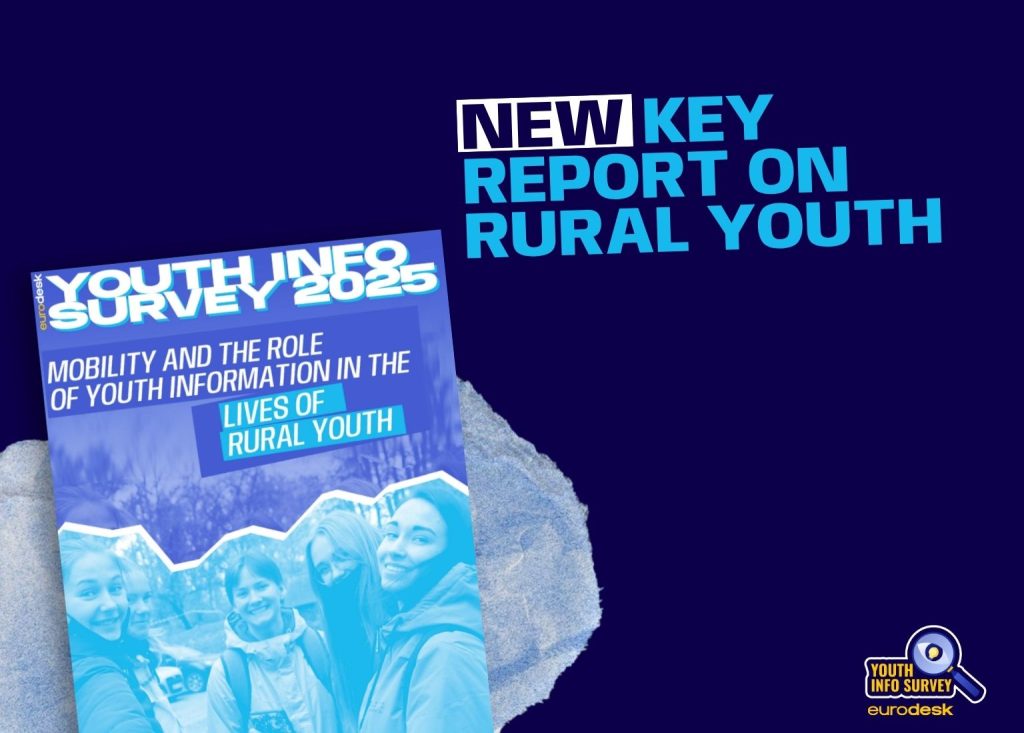
No young person should be left behind! Eurodesk is calling on EU policymakers to make youth information a central pillar of the next Erasmus+ Programme, stressing that while the proposed €40.8 billion budget and streamlined framework are promising, only sustained investment in outreach and reliable youth information services, like Eurodesk, will ensure that all young people, especially those most at risk of exclusion, can access and benefit from EU opportunities.
On 16 July 2025, the European Commission published its proposal for the next generation of the Erasmus+ Programme (2028–2034).
The draft regulation foresees a budget of €40.8 billion, which represents a 30% increase compared to the current programming period. Key changes include the integration of the European Solidarity Corps and a restructured framework with two main pillars: learning mobility and capacity building support. Eurodesk is explicitly referenced under the second pillar, alongside other networks and organisations, albeit in a footnote.
Eurodesk welcomes the increased budget allocation and the commitment to a simplified programme architecture that aims to make opportunities more accessible to citizens, particularly young people. A significant budget increase would position Erasmus+ as a central tool for preparing Europe’s young generation for future challenges and opportunities, thereby contributing to Europe’s preparedness.
However, further clarity and strengthened commitment to youth-specific objectives, non-formal education and youth work are needed to ensure that youth remains a priority in Erasmus+. As inclusion remains a strong priority, support outreach measures to engage young people in the programme, especially through specialised information networks such as Eurodesk, is essential.
About Eurodesk
Eurodesk is officially recognised by the EU as the European youth information network responsible for raising awareness about learning mobility opportunities and encouraging young people to become active citizens, supporting the implementation of Erasmus+ and the EU Youth Strategy.
Outreach (2024 data):
- Counts 4,031 multipliers and ambassadors as local information providers
- Informed over 2 million young people online and offline
- Answered over 272,600 enquiries from young people
- Organises over 1,970 Euroclasses and over 7,030 events
- Delivers over 200 network meetings and training courses for youth workers
- Has 610,000 subscribers to its newsletters, 6,2M followers on its social media channels and 11,5M visits on its websites.
Giving a chance to all requires a strong youth chapter
The youth chapter of Erasmus+ and the European Solidarity Corps are highly effective in engaging young people with fewer opportunities by providing accessible, non-formal learning and youth work outside school settings. They have a proven impact on developing key personal, social, and civic competences, fostering active citizenship and stronger community ties. They also equip diverse groups of young people with skills for future jobs and support Europe’s preparedness for the green and digital transitions, in line with the Union of Skills strategy. These broad impacts demonstrate why maintaining a dedicated youth chapter and earmarking a budget of at least 15% is paramount.
The future Youth chapter should continue to focus on core values of mobility, inclusion, solidarity, and civic engagement, while recognising its impact on skills development. It should also integrate the European Solidarity Corps with a dedicated earmark and a continued focus on volunteering, community action and solidarity.
According to the 2025 interim evaluation of the European Solidarity Corps, participation of young people with fewer opportunities increased from 25% in 2018 to 40% in 2023, clearly demonstrating the programme’s inclusivity and impact. The evaluation highlights that the programme is highly effective in promoting inclusion, stating: “The evaluation highlights the strong impact of the European Solidarity Corps in promoting inclusion, diversity, and democratic participation, reinforcing European identity and values1”.
Similarly, for Erasmus+, the 2025 mid-term evaluation notes: “The share of participants with fewer opportunities grew from some 10% during 2014–2020 to 15% in 20232”. This steady growth underscores that inclusion has become a growing priority and an area of tangible achievement within the youth chapter of Erasmus+.
Prioritising information and outreach
Youth information must remain a top priority in the future Erasmus+ programme in line with the EU Youth Strategy3 as it serves as the backbone for ensuring that all young people, regardless of background, geography or ability, are informed about the life-changing opportunities offered by the EU.
The Eurodesk Network, with its 38 national coordinators and over 4,000 local multipliers and ambassadors, proves the effectiveness and reach of well-resourced youth information services, ensuring that EU opportunities are both visible and accessible to diverse youth populations and those most at risk of exclusion. These services operate within schools, communities, and digital and physical spaces, allowing young people to access tailored information and support, and peer-to-peer engagement. Offering access to information via an established structure in local communities contributes to building trust and gives a personal and relatable face to Europe. Especially in times of disinformation and populism, Eurodesk is a guarantor of reliable, trustworthy and secure youth information.
Eurodesk and other support networks receive funding under the Erasmus+ key action 3, “Support to policy development and cooperation.” In the Commission’s proposal, this action has been merged with key action 2, and support networks are only mentioned in a footnote. It is essential to emphasise the critical role these networks play in achieving policy and programme priorities. Specifically, Eurodesk helps make EU opportunities tangible and accessible to young people, especially those from less advantaged backgrounds.
Support networks ensure sustainable policy impact through strategic, continuous operational activities that go far beyond short-term projects. To maintain and amplify their effectiveness, these organisations must receive sustained operational support enabling them to respond flexibly to evolving needs and contribute meaningfully to the objectives laid out for the future Erasmus+ programme.
Continued and increased investment in a professional European information network, such as Eurodesk, is vital for raising awareness and boosting participation, ensuring that youth information and local outreach remain robust and that the transformative ambitions of the new programme are fully realised. This is why Eurodesk operates with a central office, Eurodesk Brussels Link, national Eurodesks, local multipliers and ambassadors.
Today, “lack of information” continues to be highlighted as a key obstacle to participation:
- In the flagship initiative Europe on the Move: “key barriers to learning mobility, including financial and social constraints, lack of information and guidance, language and accessibility barriers, and administrative obstacles”4. The citizens’ panel stressed the importance of “increasing further awareness of opportunities and encouraging the participation of people with fewer opportunities”5.
- In the context of the European Year of Youth 2022, the EU acknowledged that “Information and awareness are prerequisites for meaningful youth participation, and they also enhance the sense of European belonging and outlook for young people”6.
- According to the last Eurobarometer survey7 released in May 2024, 49% of young people know about Erasmus+. It’s much less for other initiatives such as the European Youth Week (17%)8. “Lack of Information” appears in the top 3 obstacles to youth participation.
- According to the Eurodesk Youth Mobility and the Role of Youth Information Survey, access to information is highly unequal in Europe: 19% never looked for info about going abroad (49% of those under 15, 30% of the rural youth) and 75% state that having an information centre nearby that provides information and personalised support is useful or very useful.
Providing centralised youth-friendly access to the programme
At the EU level, building on the successful model used for the European Solidarity Corps, making all future Erasmus+ youth chapter actions accessible and easy to apply for via the European Youth Portal (EYP) would further broaden engagement, especially among first-time applicants. Today, young people can apply to DiscoverEU, a flagship action of the Erasmus+ programme, and to the European Solidarity Corps, through the EYP. Integrating the other actions of the Erasmus+ youth chapter on the Portal is key to ensuring equal and simple access for young people across Europe. The rapidly rising number of daily visitors, driven by high-visibility actions like DiscoverEU, shows that young people actively seek centralised, user-friendly sources of information about EU opportunities.
Centralising access not only increases visibility but also ensures young people can benefit from high-quality, youth-friendly content and direct support from the European Youth Portal helpdesk “Ask a Question”, powered by Eurodesk. However, in this context, it is essential to ensure the accuracy and accessibility of the provided information, addressing challenges such as AI-generated or automatically translated content, which still falls short in terms of quality and consistency for many users. Investing in verified, human-curated content and interactive features would further enhance trust and safeguarding for young users, making the European Youth Portal a true one-stop gateway for all EU youth opportunities.
What about AI?
Eurodesk promotes the responsible use of AI in youth information services and showcases innovation through AI-based solutions, such as the EMA chatbot. In recent years, it has become clear that digital channels, including AI and social media, cannot replicate the unique impact of in-person information work conducted by Eurodesk mobility advisors at the local level. For example, data from Eurodesk Germany confirms that face-to-face information provision through lectures, seminars, and trade fairs has grown significantly and now outpaces online advice, highlighting how local presence and direct engagement strengthen trust, tailor support, and reach young people who may otherwise be excluded. This underlines that, while digital tools add value, the core strength of the Eurodesk network lies in its network of skilled youth information workers who deliver real impact in communities.
Inclusive access & participation also implies simplification
Eurodesk supports the further simplification of the Erasmus+ programme, particularly the youth chapter, to enhance accessibility for young people, youth organisations, and informal groups of young people who benefit from these actions. Evidence from initiatives such as DiscoverEU clearly demonstrates that participation by young people increases when application processes are simplified and entry barriers are lowered. Similar approaches could be applied to other actions, such as Youth Exchanges, Youth Participation Projects, and the European Solidarity Corps, to make opportunities genuinely accessible to those with fewer resources and less experience.
Programme design should also include transparent mechanisms for verifying the relevance, credibility and local engagement of applicants, to prioritise funding for organisations that have a direct, genuine and positive impact on young people, youth workers and their communities. Today, complicated application procedures and limited access to information often lead to Erasmus+ and European Solidarity Corps funds benefiting “project factories” disproportionately, a challenge now amplified by the potential of AI to reinforce these structural advantages.
To address this, simplified procedures, such as shorter forms and microgrants, alongside a more human-centred approach to project selection and follow-up, are essential. These improvements, together with user-friendly communications, will make it easier for young people and relevant organisations to access the programme, raise motivation to participate, and ensure that support reaches those who need it most.
1 Report from the Commission to the European Parliament, the Council, the European Economic and Social Committee and the Committee of the Regions on the Interim evaluation of the 2021-2027 European Solidarity Corps and final evaluation of the 2018-2020 European Solidarity Corps, COM/2025/144 Final.
2 Report from the Commission to the European Parliament, the Council, the European Economic and Social Committee and the Committee of the Regions on the Interim Evaluation of the 2021-2027 Erasmus+ Programme and the Final Evaluation of the 2014-2020 Erasmus+ Programme, COM/2025/395 Final.
3 “Youth Information and Support” is recognised in the EU Youth Strategy as one of its policy instruments: “with the adequate provision of quality youth information services and platforms at all levels, including the European Youth Portal, and with the support of European-wide organisations, young people’s equal access to quality information on their rights, opportunities, youth services and EU programmes for young people can be promoted”.
4 Proposal for a Council Recommendation ‘Europe on the Move’ – learning mobility opportunities for everyone, November 2023 – “key barriers to learning mobility, including financial and social constraints, lack of information and guidance, language and accessibility barriers, and administrative obstacles” page 3.
5 21 recommendations to make learning opportunities abroad a reality for all, European Citizens Learning Mobility Panel, European Commission, 2023.
6 Communication from the Commission on the European Year of Youth 2022, page 8.
7 Eurobarometer Survey 3181 Youth and Democracy, May 2024.
8 Eurobarometer Survey 2282 Youth and Democracy in the European Year of Youth, May 2022.